Resources To Maximize Your A/V Capture!
Discover the latests guides, check-lists, blogs, webinars, and whitepapers that cover the topics of video and A/V and its impact on experiential learning, skill development, research, and evidence capture.


Athletic training programs often search for ways to give students hands-on experience in environments that feel real and still remain safe. A recent hybrid simulation research study published in the Athletic Training Education Journal, titled “Integration and Outcomes of a Hybrid Simulation for Simple Laceration Suturing,” brought those goals together by pairing a live standardized patient with a suturing task trainer. The encounter required students to manage wound care, communicate with a patient, and complete technical steps without an instructor in the room. VALT recorded every moment so faculty could observe the session in real time and later review it with each learner.
Students engage with advanced clinical skills in the classroom, yet many rarely face situations that resemble an authentic patient interaction. Athletic trainers receive education in basic wound care and wound closure, but some athletic training injuries would benefit from more advanced acute triage efforts to improve injury outcomes. Suture training does not entirely replicate a real-life scenario, as most suturing training involves inanimate objects and requires no patient interaction. Learning through a live patient scenario with an instructor watching from a few feet away can also limit natural behavior. Educators needed a method to reproduce the experience of a live scenario while also giving space for independent action.
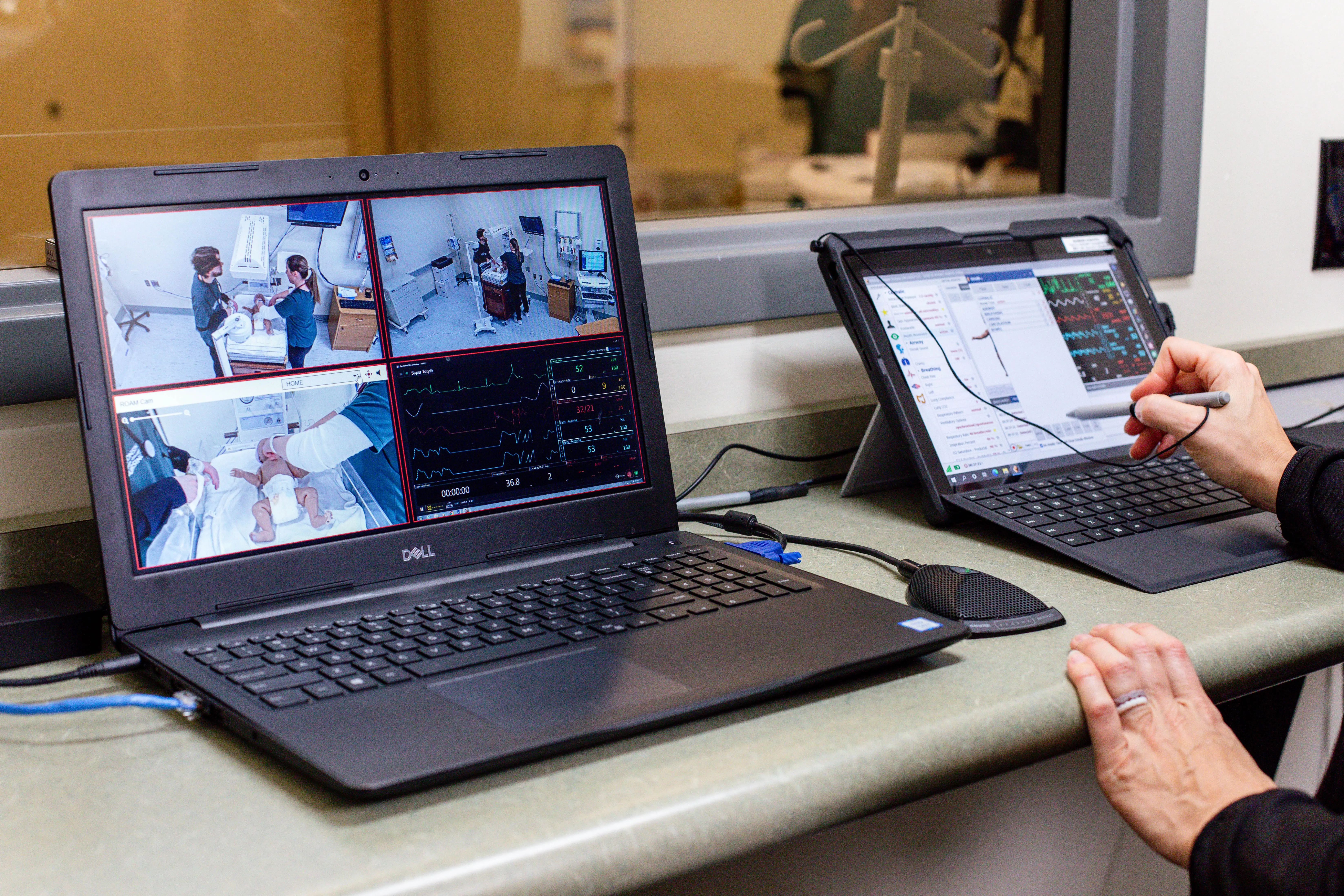
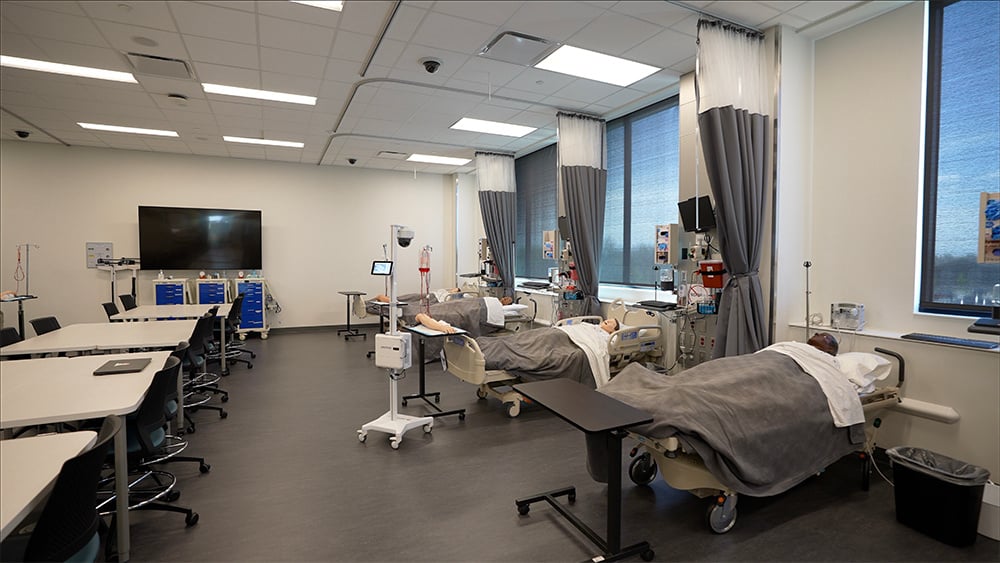
The simulation took place inside two athletic training facilities equipped with VALT cameras and microphone arrays. The faculty configured the system so that every interaction could be viewed from multiple angles and monitored remotely from a control room. Instructors used pan and zoom features to examine wound cleaning, injection preparation, and suturing technique while also listening to the student’s communication with the patient. Athletic training students entered the room, met their patient, and began working through the problem with no direct coaching. VALT captured each moment and preserved it for later debriefing.
VALT provided a stable way to observe delicate procedures without disrupting the learner. The faculty used the live view to track progress and evaluate both technical and interpersonal skills. The recording allowed instructors to return to specific moments during debriefing, including examples of strong patient interaction or steps that needed improvement.
Integrating a live patient into the scenario required the students to balance conversation, patient comfort, and technical skill. Watching the playback offered clarity that can be difficult to achieve in the moment and faculty members gained reliable evidence of performance that informed coaching throughout the semester.
Realistic practice opportunities help students bridge the gap between simulation labs and clinical rotations. VALT made this suturing scenario possible by offering a clear line of sight into the encounter while preserving the natural flow of the experience. Programs that rely on VALT can create structured simulations that build confidence, reveal learning needs, and support deliberate skill development in a controlled setting.
Discover the latests guides, check-lists, blogs, webinars, and whitepapers that cover the topics of video and A/V and its impact on experiential learning, skill development, research, and evidence capture.